
Advice and inspiration
Are the dyes used in rugs natural or synthetic?

Hand-knotted rugs may use natural or synthetic dyes, and both can produce beautiful, lasting colour. Historic workshops worked with plants, insects and other natural sources. Synthetic dyes spread from the second half of the nineteenth century and are now a normal part of rug production.
The simple rule that natural means good and synthetic means bad does not work. Well-prepared natural dyeing can create a deep, varied palette, but a poor recipe may fade or bleed. A good modern synthetic dye can be precise and colourfast, while inadequate fixation can give it the same problems as badly executed natural dyeing.
Where traditional natural colours come from
A natural dye is not a finished colour squeezed from one plant. The source material is collected, dried or crushed, its active compounds are extracted in a water bath and the yarn is dyed under controlled temperature and pH. Many shades use a mordant, a substance that helps bind the colourant to the fibre and may also change the resulting tone.
- Madder: its root produces a range from warm orange-red to deeper reds.
- Indigo: blue develops through a specific reduction process followed by oxidation in the air.
- Walnut husks and tannins: these can contribute brown, beige and muted tones.
- Pomegranate rind and other plants: depending on the recipe and mordant, they may contribute yellow, gold, greenish or subdued shades.
- Insect dyes: colourants such as lac and cochineal can produce intense red to crimson.
The fibre, source and age of the dyestuff, water, vessel, bath duration and mordant all affect the result. Two batches made from the same recipe may therefore differ slightly.
What is abrash, and why is it not necessarily a flaw?
Abrash is a change in shade that appears when the weaver moves from one yarn batch to another. It typically follows the direction of the woven rows: a red field may move from brick red into a slightly deeper claret and then change again later.
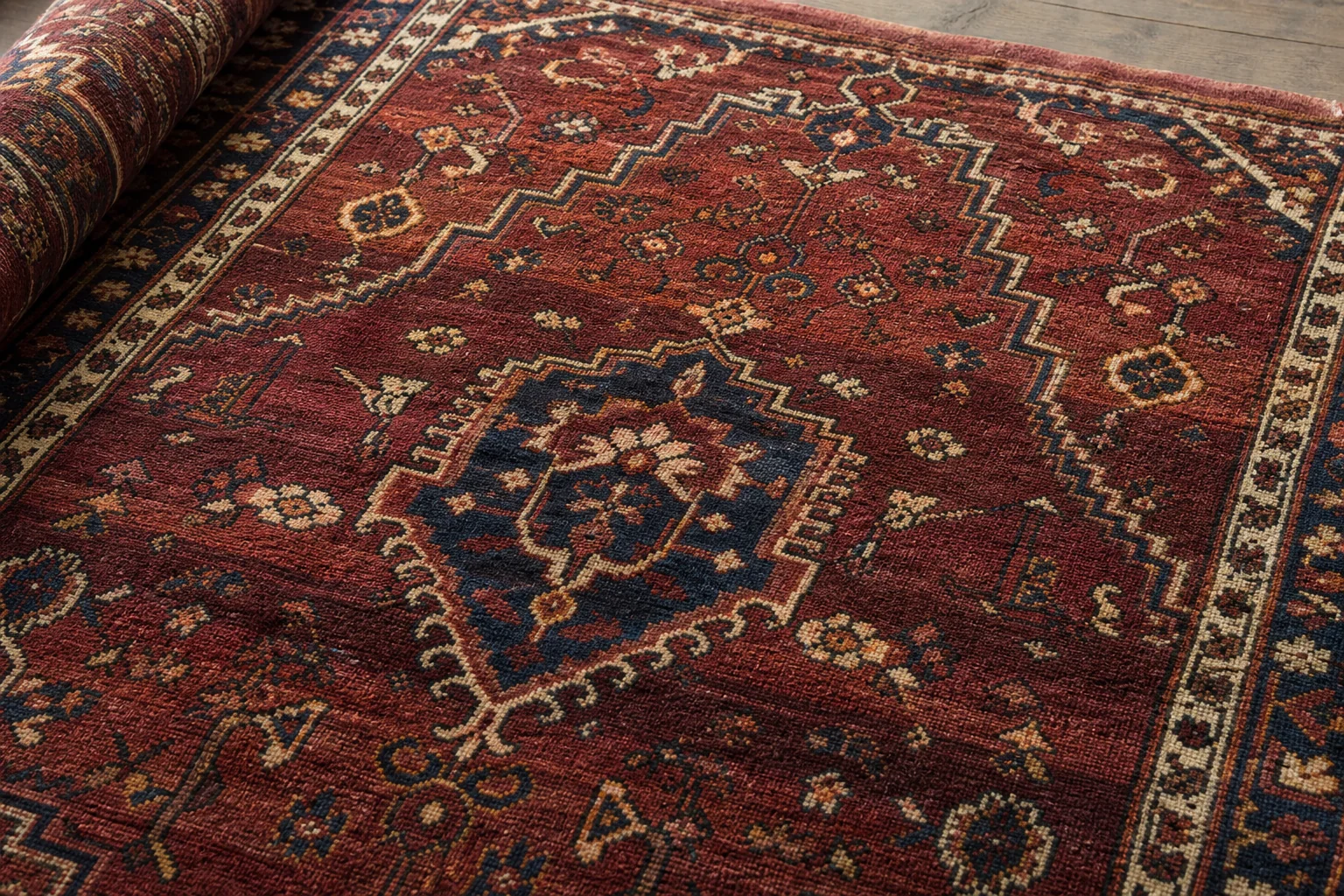
Subtle abrash follows the progress of weaving and gives the field depth; it is not automatically fading or a stain.
Abrash develops naturally with hand-spun, hand-dyed yarn, but it can also appear in smaller industrially dyed batches. It does not prove a particular dye or age. In a traditional rug it can be a valued part of the drawing when the transition is harmonious and unrelated to damage.
Sun fading normally follows the area of exposure, perhaps affecting only the part near a window. A chemical stain tends to be local and may alter the handle of the fibre as well. Abrash, by contrast, relates to yarn rows and the progress of weaving. When uncertain, compare the face with the reverse and seek specialist assessment.
Synthetic dyes are not one single chemistry
The first synthetic dyes developed in the mid-nineteenth century. Some early types introduced new, extremely bright colours, but their stability was not always reliable. Experience with cheap and unstable colour helped create a poor reputation that is sometimes incorrectly applied to all modern synthetic dyes.
Contemporary production uses different dye classes for particular fibres and performance requirements. The correct dye, controlled pH and temperature, adequate fixation and thorough rinsing can create precise, repeatable shades. This matters for bespoke rugs where several yarn batches must correspond with an approved colour sample.
Synthetic dye is not an automatic guarantee of colourfastness. Oversaturated unrinsed yarn, an unsuitable recipe or weak process control may cause bleeding, migration into pale areas or premature fading.
Natural and synthetic dyeing at a glance
| Property | Natural dyes | Synthetic dyes |
|---|---|---|
| Source | Plants, insects and other natural materials | Industrially prepared dye compounds |
| Repeatability | Batches may naturally vary slightly | A controlled process can reproduce shades more accurately |
| Palette | Complex, often subtly changing tones | Very broad range, including precise contemporary colours |
| Colourfastness | Depends on fibre, recipe, mordant and rinsing | Depends on dye class, fibre, fixation and rinsing |
| Typical advantage | Nuance and natural variation between batches | Consistency for large or repeat commissions |
| Typical risk | A poor recipe or mordant may weaken the colour | Low-grade or inadequately rinsed colour may bleed |
What really determines colourfastness
- Suitability for the fibre: wool, silk and cotton do not respond identically to the same dye bath.
- Yarn preparation: dirt, grease and processing residues may prevent even penetration.
- Recipe and mordanting: concentration, pH, temperature, time and correct auxiliaries affect both tone and bonding to the fibre.
- Rinsing and finishing: loose dye must be removed so that it does not later migrate into other parts of the rug.
- Light and use: prolonged direct sunlight affects both natural and synthetic colours; the degree varies with the individual dye.
- Cleaning: unsuitable pH, temperature or chemicals can damage even a colour that was originally well fixed.
Can natural dye be identified by eye?
Visual clues can sometimes help. Natural dyeing may show subtle shade variation, harmonious abrash and a complex tone, while some inexpensive synthetic colours appear flat or unnaturally bright. These are not proof. A skilled dyer can produce a natural-looking palette with modern dyes, and synthetic yarn can deliberately be dyed in slightly different small batches.
Reliable identification in a valuable historic rug requires knowledge of provenance and construction and sometimes laboratory analysis of a tiny sample. Conservators use methods that separate and identify the individual colouring compounds. A photograph, ultraviolet light or an undocumented seller's statement is not enough by itself.
Avoid the wet-cloth test at home
Rubbing a rug with a wet white cloth is often suggested as a simple test, but it can lift surface dirt, abrade fine pile or start migration of an unstable colour. The result cannot determine whether the dye is natural or synthetic either.
Before professional washing, a specialist should assess the material and test every significant colour in an inconspicuous area before choosing a method. At home, blot a spill without rubbing and avoid universal cleaning products.
Is natural dyeing more sustainable?
Plant origin does not automatically mean a small environmental footprint. The source of the material, water and energy use, mordants and wastewater treatment all matter. Synthetic dyeing operations also vary widely in process control and waste management.
If dye provenance matters to you, ask about the specific workshop, yarn traceability, substances used and water management. The general word “natural” without supporting information is not a complete answer.
What to ask when buying
- Was the yarn coloured with natural, synthetic or mixed dyes?
- Is that statement documented by the maker or a specialist assessment?
- Was colourfastness checked before the rug's final washing?
- Are shade changes intentional abrash, or did they result from use, light or repair?
- What cleaning method and limits on direct sunlight does the seller recommend?
The best colour is not defined only by its origin. A well-dyed rug has a balanced palette, colours appropriate to the fibre and purpose, and no evidence of unwanted bleeding. Natural and modern synthetic dyes can both serve for a very long time when used expertly.